Thousands or even millions of years ago, a prehistoric creature may have been living exactly where you are today.
In Sussex, Passaic or Morris counties, this creature may have been an elephant-like animal called a mastodon, stomping up those roads during the Cenozoic Period, between 2.6 million and 12,000 years ago.
In Bergen or Essex counties, there may have been a dinosaur known as a grallator leaving its footprints in these yards during the Mesozoic Period, between 250 million and 65 million years ago.
Two of the most notable prehistoric creatures are known to have inhabited modern-day New Jersey, according to a map from the Department of Environmental Protection that has information about time periods, evolutionary ages, rock types and species types all around New Jersey.
NJ fossil finds
There are 139 fossils found in New Jersey, and 26 of them are from the Norian age of the Triassic Period, 227 million to 209 million years ago. Fossils are the most abundant in South Jersey and northwestern New Jersey, and they were uncovered during the construction of roads and buildings, in creek beds, and during quarrying.
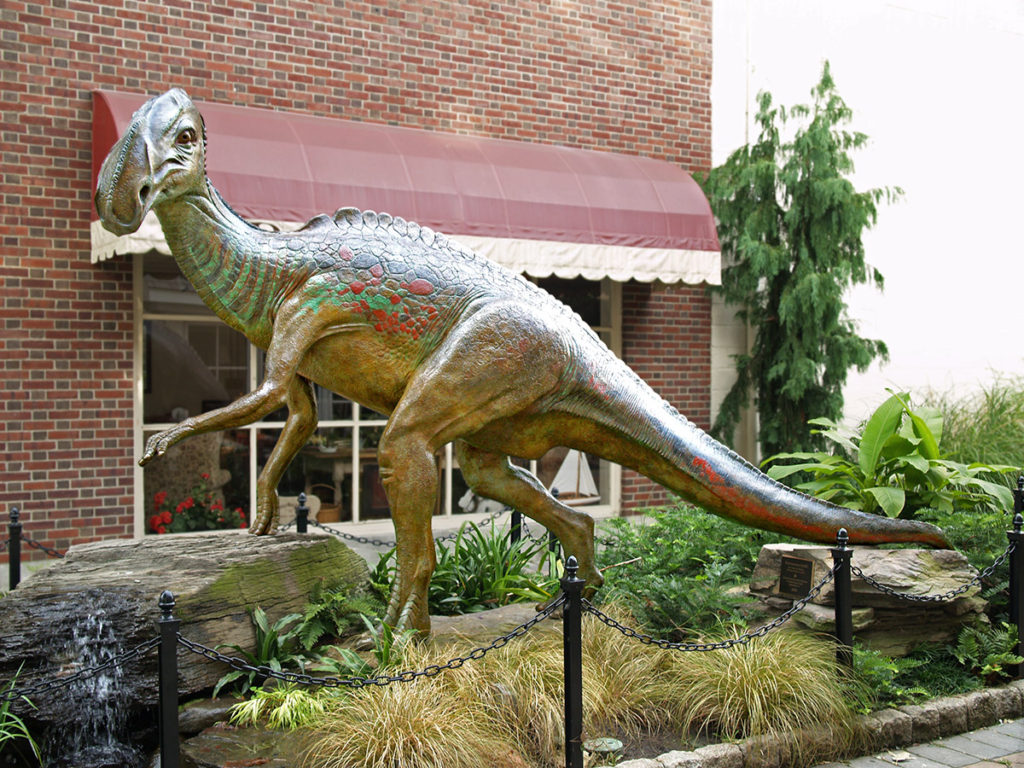
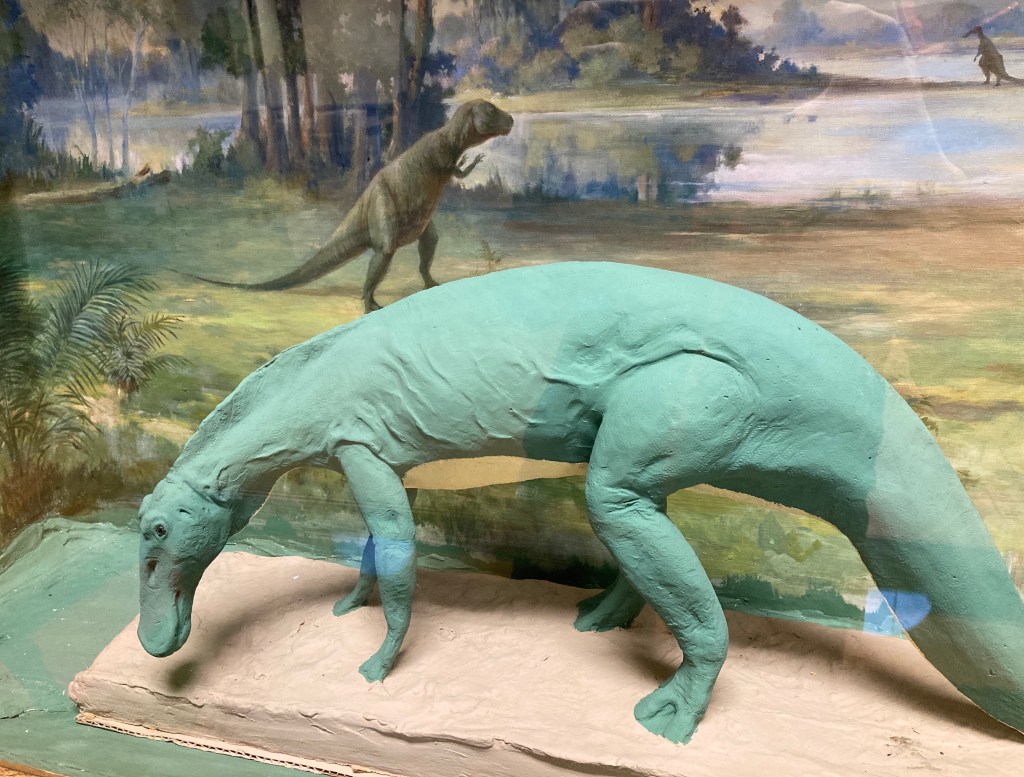
New Jersey was home to the first nearly intact dinosaur skeleton ever found in North America. The Hadrosaurus foulkii is the official state fossil.
The Rutgers University Geology Museum revealed that the Hadrosaurus was found in the late 1830s by a farmer named John Estaugh Hopkins while he was digging in Haddonfield and started to uncover large bones. In 1858, Hopkins showed the bones to his friend William Parker Foulke, who decided to begin an excavation of the area with Joseph Leidy.
In 1858, they retrieved almost an entire skeleton except the skull. Ria Sarker of the Rutgers Department of Earth and Planetary Sciences said this discovery “marked a significant moment in the field of vertebrate paleontology in the late 1800s.”
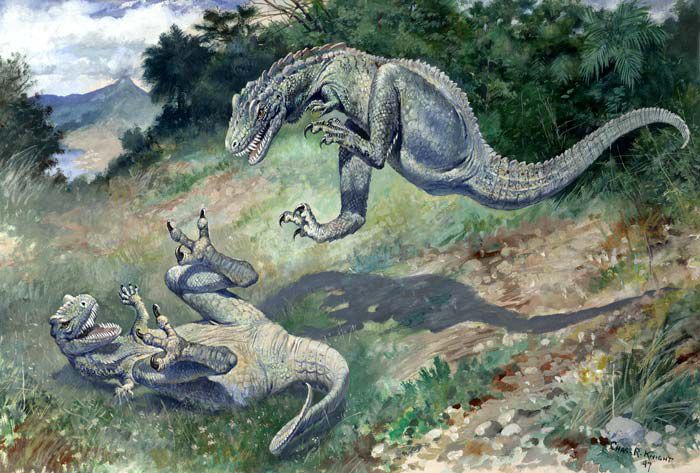
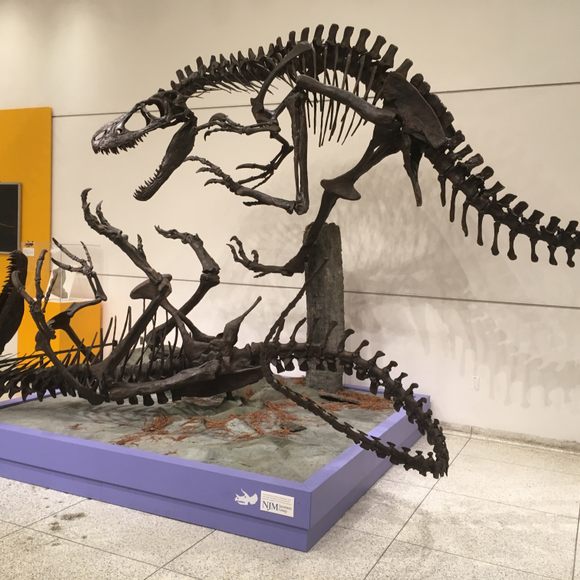
In 1866, remains of the predatory Dryptosaurus were found nearby, another significant discovery in the world of paleontology. Two skeletons were the most complete known dinosaurs at the time; it’s revealed that these types of dinosaurs walked around on two legs, leading them to reconsider what dinosaurs may have looked like and how they may have evolved.
The most commonly found fossils in New Jersey are Grallator three-toed footprints and from Hadrosaurids, also known as duck-billed dinosaurs.
Sources
https://www.northjersey.com/story/news/local/2023/12/27/new-jersey-dinosaurs-history/71904282007/
 DinoNJ
Leave a comment