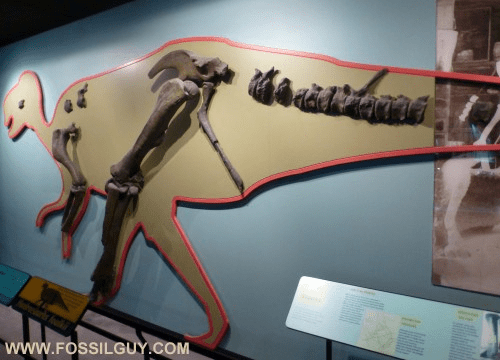
The dinosaurs have always been popular throughout the Triassic, Jurassic, and Cretaceous time periods to the public. Its history started in 1838 when North America’s very first nearly complete dinosaur was discovered in Haddonfield, New Jersey called the Hadrosaurus foulkii. This duck billed dinosaur was later studied in 1858.
Now, Paleontologists are still searching for fossils such as Cretaceous fossils. Most notably, in the Monmouth County, Cretaceous age fossils can be found in the Big Brook where surrounding brooks cut through the ground, digging though the layers of earth. These brooks erode through recent layers, cut into the Pleistocene, and finally carve away at ancient fossil bearing Cretaceous deposits.
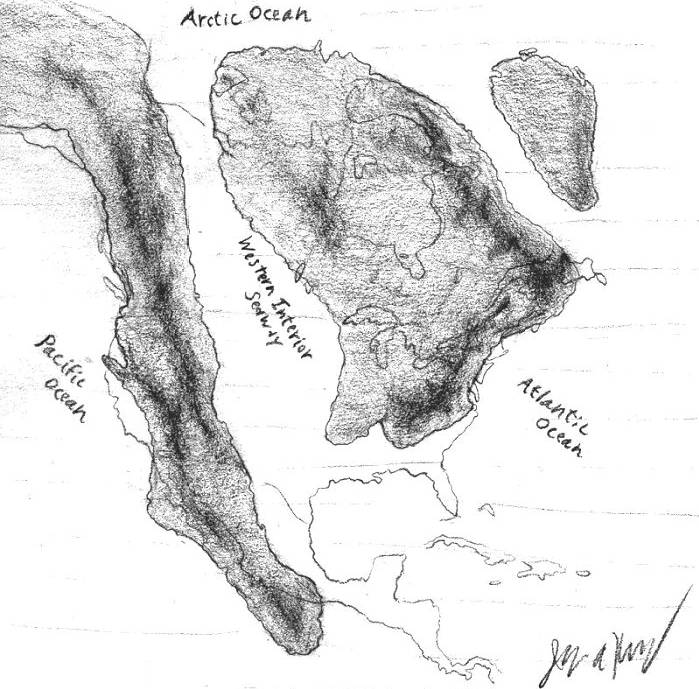
During the Cretaceous, our continents were nearly in their present positions. However, the Earth was much warmer, resulting in high sea levels. Europe was composed of numerous islands, while most of the North American coastal plain was submerged. States such as Georgia and Florida were completely submerged. The high sea levels also caused North America to be split in two. A great interior seaway flowed through much of the great plain states, from Texas to North Dakota and through Northern Canada.
New Jersey was also submerged. Remains of prehistoric animals accumulated on the sea floor that is now known as New Jersey. These remains were buried by the nutrient rich sediments coming from shore, and are now part of fossil bearing layers of the Monmouth Group. These Cretaceous marine fossil layers are exposed by brooks that cut down through sediments in the Big Brook area. Numerous fossils of sharks can be found as well as invertebrates such as mollusks and Belemnites. Also, the great reptiles that ruled the seas in the Cretaceous can occasionally be found. These creatures include Mosasaurs, Pleisiosaurs, and large Crocodiles. To learn about Mosasaurs, go to the Mosasaur Gallery.
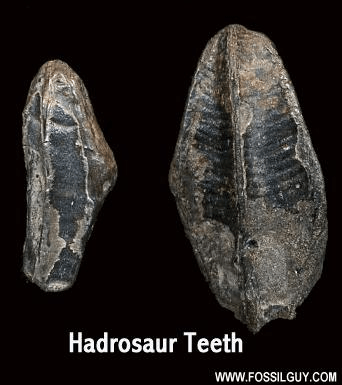
However, since this area of New Jersey was only miles from the coast, the remains of land animals occasionally washed out to sea. Although rare, fossils of land animals can be found. These fossil remains are often pieces of dinosaurs, such as Hadrosaur teeth and bone fragments.
Fossils in the Big Brook area have been washed out of their sediments by the water action. These fossils can simply be found in Big Brook and surrounding brooks by screening gravel bars and walking the creek beds.
Dinosaur Teeth
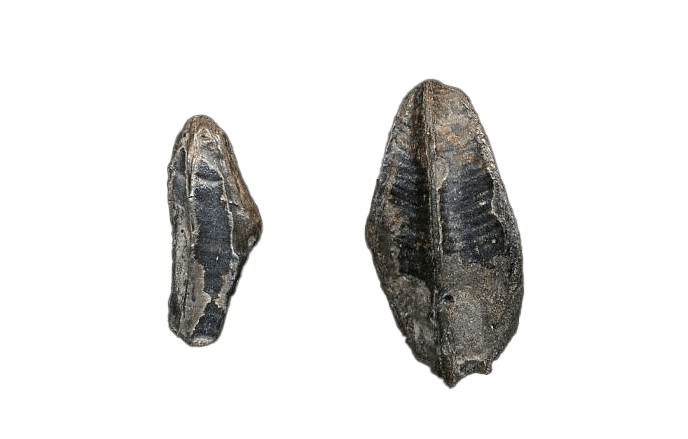
Dinosaur remains that floated offshore during the cretaceous are sometimes found with the marine fossils. They are scarce finds. The most common dinosaur material found are Hadrosaur teeth. They are very small and are often very worn. Although all dinosaur material is scarce, hadrosaur teeth tend to be the most common type of Dinosaur fossil found.
Mosasaur Great Marine Reptile
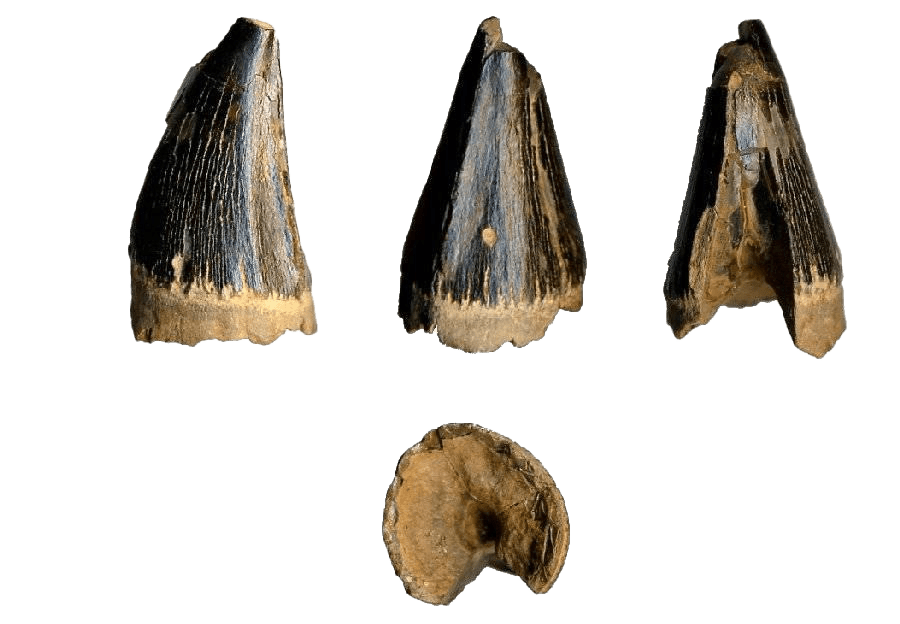
The Mosasaur was a great marine reptile that thrived during the Cretaceous. It was a top predator of the seas. The most common species of Mosasaur found in Monmouth County is M. conodon, a medium sized Mosasaur.
Mosasaur teeth superficially look like crocodile teeth. However, mosasaur teeth have a distinct cutting edge (seen in the top center view). The cutting edge is the easiest way to distinguish mosasaur teeth from crocodile teeth.
Dinosaur spots around New Jersey
If you want to see dinosaurs today, there are lots of opportunities around New Jersey.
You can visit the area where the Hadrosaurus was found in Haddonfield, which displays a large statue of the dinosaur.
The Rutgers University Geology Museum in New Brunswick has a display of our state dinosaur that you can visit, along with many other New Jersey artifacts including other dinosaur fossils and rare minerals.
Most of the known fossil beds in New Jersey are closed to the public, but you can visit the Poricy Park Conservancy in Middletown, which houses the Poricy Brook Fossil Beds. These creek beds contain fossils from the Cretaceous Period of the Mesozoic Era, 145 million to 65 million years ago. If you are lucky enough to find some, you are allowed to take them home, but the park asks that you keep it to a five-fossil maximum.
Where to find the Cretaceous Fossils
The Fossils can be found just past Freehold, New Jersey. Some locations are shown below.
Remember to adhere by the collecting regulations listed further down this page and no trespassing on any private property. Stay in the creeks and no digging.
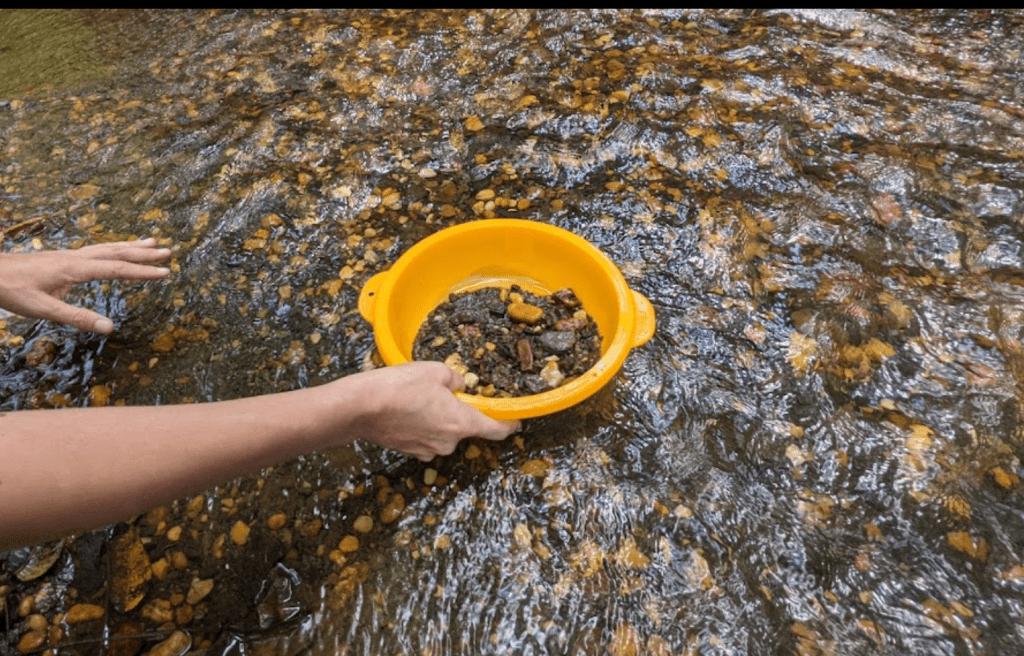
In Big Brook Preserve in Monmouth County, you can dig for fossils, but visitors must adhere to the rules that are posted around the park.
Big Brook Preserve – Hillsdale Road
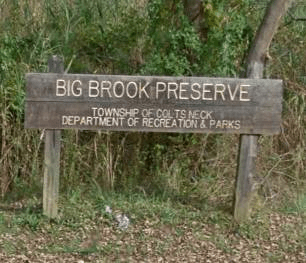
The Big Brook Preserve is a small pulloff on the side of the road near the Winery (Four JGs Winery). Once you park here, there is a small walk to Big Brook. When you collect fossils here, adhere to the regulations listed.
Boundary Road Access point is Closed
The popular access point on Boundary Road is closed, please use this nearby Hillsdale Road access instead.
Fossil Collecting Regulations for Big Brook and Colts Neck Township:
If you plan on fossil collecting at Big Brook or the surrounding brooks, please be aware of the rules from the Township of Colts Neck. The Township link changes occasionally, so here are the rules pertaining to the fossils:
1. Only keep 5 fossils per day.
2. Your trowel is restricted to a maximum blade of 6 inches (no shovels)
3. Sifting screens can be a maximum size of 18″
4. The collection of fossils within the preserve is limited to those fossils found within the actual stream water line. Fossil extraction is prohibited from the walls of stream bed above the stream water line.
5. If you are in a group of at least 15, you must obtain a permit first.
How To find Fossils in the Brooks
Fossils erode from the banks and bottom of the Brooks and collect in gravel areas.
The simplest way to fossil hunt is to slowly walk the creekbeds and carefully scan the gravel areas for the occasional fossil. The key is to slowly walk. Take your time. To increase the fossil finds, both in quantity and quality, many people sift the gravel beds. A small shovel and sifter allows one to search through more gravel than simply scanning the ground for fossils.
The information below shows when to go, and what and recommended regulation equipment to bring.
When to Go
You can fossil hunt any time of the year, but it’s best to fossil hunt in the brooks just after rains and in the early spring. The rains and the freeze/thaw cycles erode more fossils out of the banks and into the grabel areas. Fossil hunting during a rain storm is not recommended, as the brooks flood. Fossil hunting in mid-summer during a drought is more difficult, as fewer fossils will have eroded out.
Recommended Fossil Hunting Equipment:
According to the township regulations, your trowel blade cannot be over 6″, and your screen cannot be over 18″ in size. I recommend the shovel and sifter shown below, they satify the regulations and are lightweight.
• Waders or thick bottomed shoes – there is lots of broken glass in the stream beds.
• Bug spray – there are lots of ticks and mosquitos in and around the streams!
• Water – It gets hot in the summer, don’t get dehydrated!
Other Places to Find Fossils

You can also dig for fossils at Liberty Science Center’s Dino Dig Adventure, a 1,750-square-foot landscape where guests can practice their paleontology skills in three sand pits.
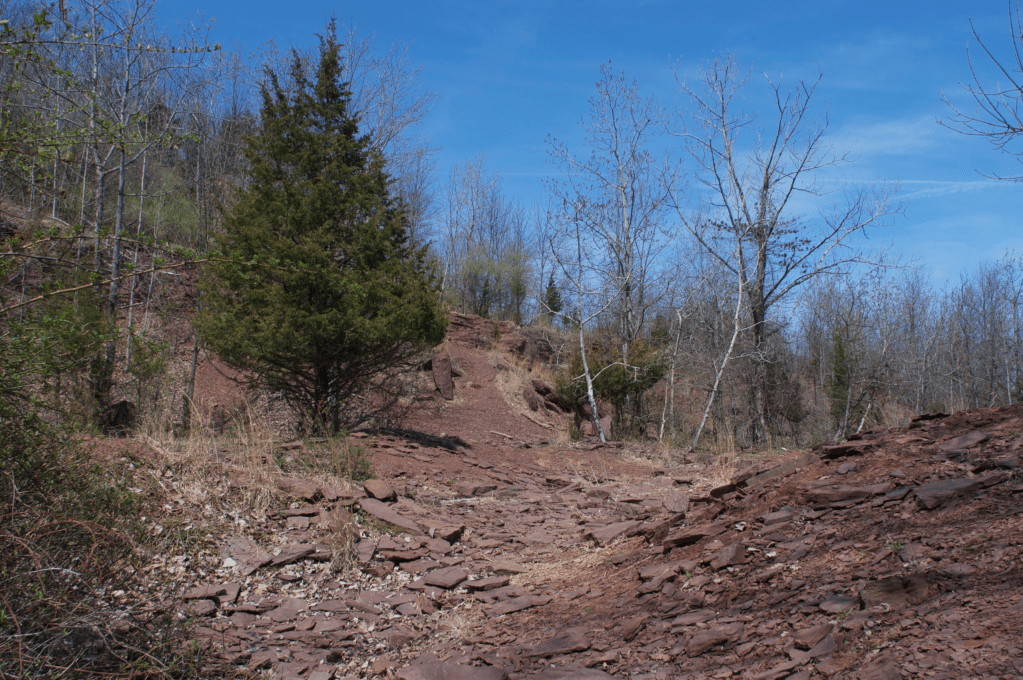
Another significant spot is the Riker Hill Fossil Site in Roseland, also known as Walter Kidde Dinosaur Park, one of the most significant fossil deposits in the United States.
This site is part of the Riker Hill complex, which includes the Riker Hill Art Park and Becker Park. The dinosaur park is not currently open to the public, but you can see more trails of life-size dinosaurs Field Station: Dinosaurs in Leonia and learn the story and science behind each one.
Sources
https://www.fossilguy.com/sites/bbrook/index.htm#regulations
 DinoNJ
Leave a comment